







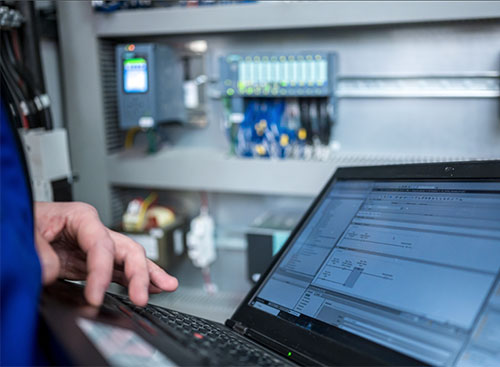
After decades of supporting manufacturing, programmable logic controller (PLC) systems seem to be reaching their limits in addressing modern requirements. These legacy platforms were never designed for the adoption of analytics, AI, and even fundamental connectivity across multiple facilities. The limitation is not reliability, as traditional PLCs remain effective for basic control functions, but rather their rigidity. By locking manufacturers into proprietary ecosystems, they create barriers to modernization and scalability.
Consider the scenario in which a company must update control software across ten manufacturing sites. Under the current model, this requires sending engineers to each location for individual installations, halting production lines, and relying on each manual configuration to proceed without error. Even with highly experienced teams, subtle differences in setup can introduce variations between sites that compound over time. Now imagine scaling from ten sites to hundreds or thousands: manual updates quickly become complex, error-prone, and nearly impossible to manage consistently.
Expansion introduces an even greater challenge. Establishing a new facility or increasing production capacity requires navigating vendor-specific hardware requirements, redeveloping control logic for diverse platforms, and managing an increasingly complex network of incompatible systems. As a result, expansion amplifies management overhead rather than leveraging economies of scale. The solution lies in a central edge management solution that supports modern application workloads, such as containerized softPLCs. This approach decouples hardware from software and provides unified control over distributed operations.
Why Current Approaches Fall Short
Traditional industrial control architectures introduce several key limitations. First, it binds control applications directly to specific hardware, making updates, migrations, and expansions unnecessarily complex. When a PLC reaches end-of-life, companies often face the difficult choice between expensive hardware upgrades or maintaining increasingly obsolete systems.
The proprietary nature of these platforms also creates additional friction. Different vendors use incompatible programming environments, communication protocols, and licensing models. This fragmentation means expertise gained on one system does not necessarily transfer to another, and integrating different brands of equipment requires custom development work. Furthermore, managing individual PLCs across multiple sites requires manual intervention for each change, creating bottlenecks that slow innovation and increase operational costs. Companies find themselves operating control systems that impede the connectivity and adaptability required in contemporary manufacturing.
Industrial operations stand to benefit from control logic capable of executing across any platform, management tools that are operable across distributed sites, and systems designed to support multiple applications simultaneously.
Core Engineering Problems & Potential Solutions
Removing Manual Configuration Limitations
Manual configuration impacts all aspects of distributed operations. When updates to control logic are needed, engineering teams must travel to each site, implement changes individually, and verify proper functionality. This process can extend over several weeks, even for minor updates across multiple facilities. Moreover, manual procedures inherently introduce variations between sites, leading to discrepancies in operational behavior that may compromise product quality and efficiency. Troubleshooting is particularly challenging, as each location may operate differently despite supposedly identical control logic.
Another important consideration is rollback procedures. If an update results in complications, resolving them may require further site visits, leading to extended downtime and increased expenses. The fear of disruption often prevents companies from implementing beneficial updates, forcing continued reliance on outdated control systems. Containerized SoftPLCs change this dynamic by enabling control applications, packaged as containers, to be deployed concurrently across multiple sites from a single centralized location. The same container that works in the development environment works identically in production, eliminating configuration drift between sites. Additionally, updates transition from hardware installation projects to software deployments, thereby reducing deployment times from weeks to hours and improving consistency across operations.
Assessing Vendor Lock-in Limitations
Proprietary control systems create long-term strategic problems that extend beyond immediate technical challenges. Companies may find themselves trapped in vendor ecosystems that dictate hardware choices, software licensing costs, and integration. This dependency weakens their negotiating position and requires them to follow vendor timelines for updates and support.
Connecting proprietary PLCs to analytics platforms, cloud services, or AI systems often demands costly middleware and custom development, with each integration introducing greater complexity and potential failure points. In addition, an engineer’s platform-specific skills are not easily transferable, creating staffing constraints and limiting flexibility in adopting new technologies.
Hardware-agnostic SoftPLCs address these challenges by operating on best-of-breed industrial computing platforms. With applications portable across multiple hardware vendors, they support competitive procurement and reduce the need for forced upgrades. Open development environments leverage familiar programming languages and tools, making it easier to find qualified personnel and enabling seamless integration with modern software ecosystems.

OnLogic's CL210 edge computer mounted in a control cabinet for industrial network protection. Image used courtesy of OnLogic
Addressing Challenges With Integration
Bridging information and operational technologies remains one of the most persistent issues in modern manufacturing environments. Take, for instance, the fact that communication protocols, like Modbus, EtherCAT, and PROFINET, operate differently from business networks and require conversion mechanisms at each integration point. These conversions require special gateways and custom programming that introduces added complexity and potential failure modes.
Moreover, production systems need to maintain constant availability, which can conflict with IT security practices that involve regular system updates and patches. This incompatibility forces companies to operate isolated manufacturing networks, cutting off the data access needed for analytics and potentially leaving security gaps.
Industrial equipment tends to generate continuous streams of real-time information that may not align with standard business database structures. The volume and frequency of this data can overwhelm standard IT infrastructure that wasn’t designed to process thousands of updates per second. Organizations often resort to building custom data translation systems that require ongoing maintenance, which limits analytical capabilities.
Edge computing platforms address the above integration issues by providing native support for both industrial and IT protocols. These systems can communicate directly with manufacturing equipment using established industrial standards, while simultaneously offering compatibility for web-based APIs that modern manufacturing applications need. This dual capability avoids many of the custom conversion layers that cause issues, and provides IT teams with the security controls and management tools they need.
Resolving Scalability Bottlenecks
At a high level, current scaling methods tend to create exponential increases in management complexity. Each new site requires individual hardware procurement, custom configuration, and maintenance that doesn’t benefit from work done at other locations. Operational overhead increases more quickly than production capacity, reducing the efficiency gains from expansion.
Resource utilization presents another challenge to scalability. Dedicated PLCs often run at low utilization rates, but standard architectures don’t allow sharing of computing resources between various control functions. This can lead to over-provisioning of hardware and inefficient use of available processing power. Managing control systems across multiple time zones or regions requires extensive travel or local technical staffing.
On the other hand, software-defined control systems improve scaling economics by treating applications as modular software rather than hardware-bound systems. New sites can be deployed by installing standard computing hardware and downloading appropriate application containers. Edge orchestration platforms also provide centralized management while preserving local autonomy, enabling companies to expand operations without adding management overhead.
Overcoming PLC Limitations
OnLogic is overcoming the limitations of PLCs with industrial computing hardware engineered for distributed edge applications. Their systems provide the raw processing power and connectivity needed to run multiple containerized applications while maintaining the environmental resilience needed in manufacturing environments. The platforms support both legacy industrial protocols as well as modern networking standards, simplifying integration challenges. Avassa complements this hardware foundation with edge orchestration software that brings cloud-native application management to industrial environments. It enables centralized deployment and management of distributed applications and maintains the local autonomy that industrial operations need. The combination of these technologies allows engineering teams to manage hundreds of distributed control applications from one central location.

Avassa provides automated and efficient placement and versioning functionality of containers and the ability to monitor and observe application health. Image used courtesy of Avassa
Ultimately, OnLogic+Avassa is a transition from hardware-centric to software-centric industrial control. This approach enables manufacturers to implement control logic changes across entire operations in minutes rather than weeks, integrate more effectively with analytics and AI systems, and scale without a proportional increase in management complexity.
Want to learn more about how SoftPLCs are making modern automation possible? Visit the OnLogic website to explore the full white paper about SoftPLCs, edge computing, and containers, and gain insights into building the resilient, high-performing industrial automation systems of the future.